Study Spot Finder

Role: Product Designer Trainee
Team: Vinson Zhang(Product Designer Trainee), Nithin Chilakapati (Product Designer Trainee)
Tools: Figma
Duration: Feb 2023 - May 2023
Project Overview
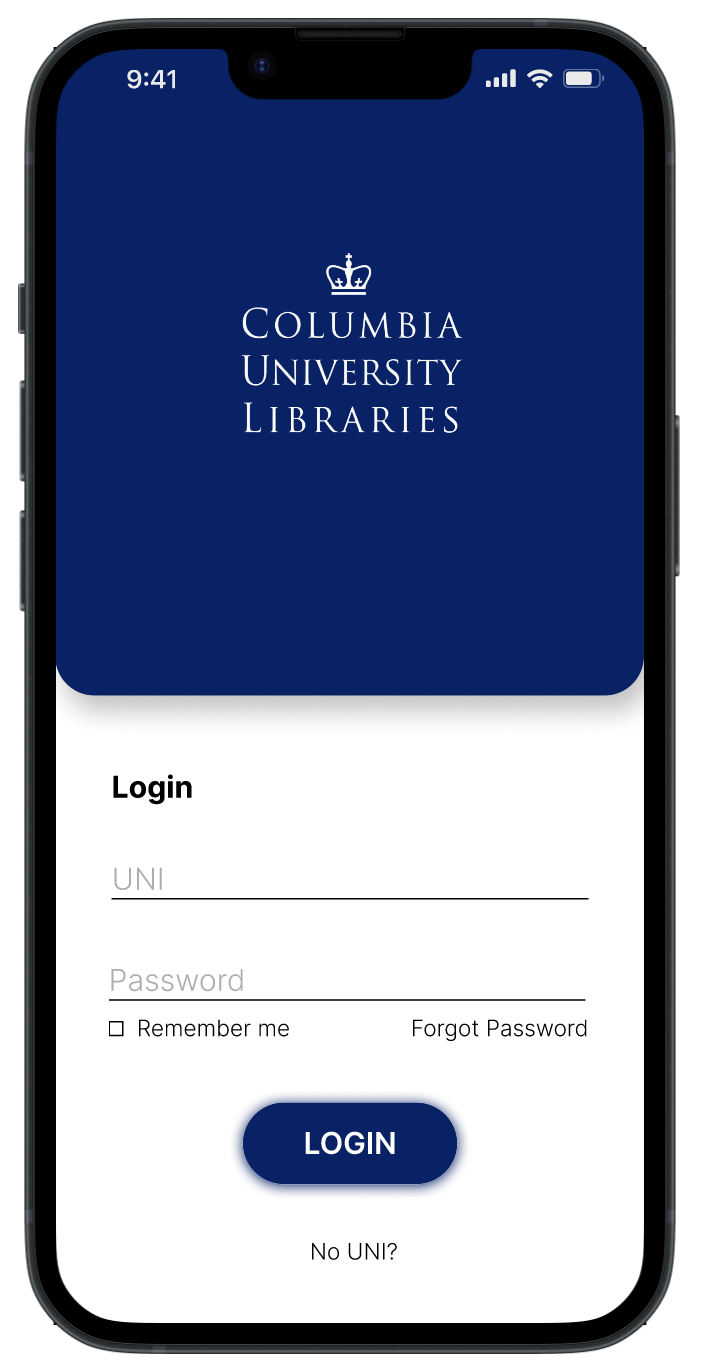
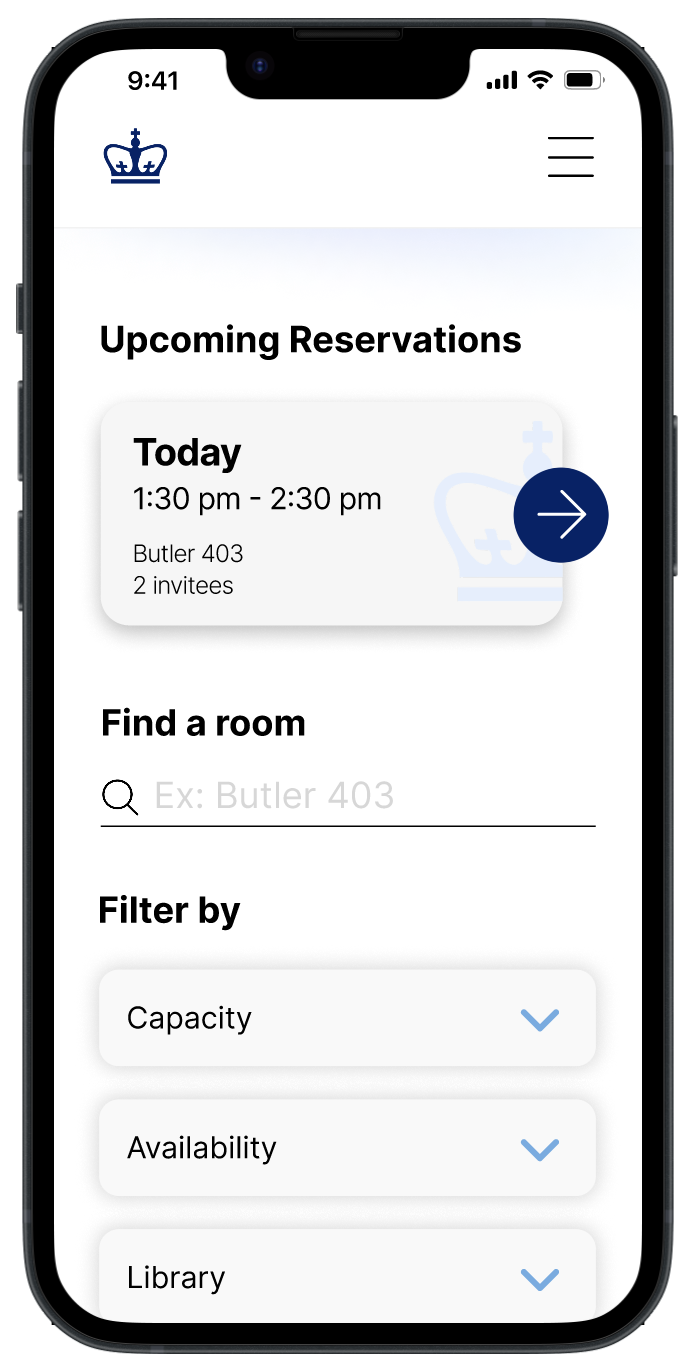
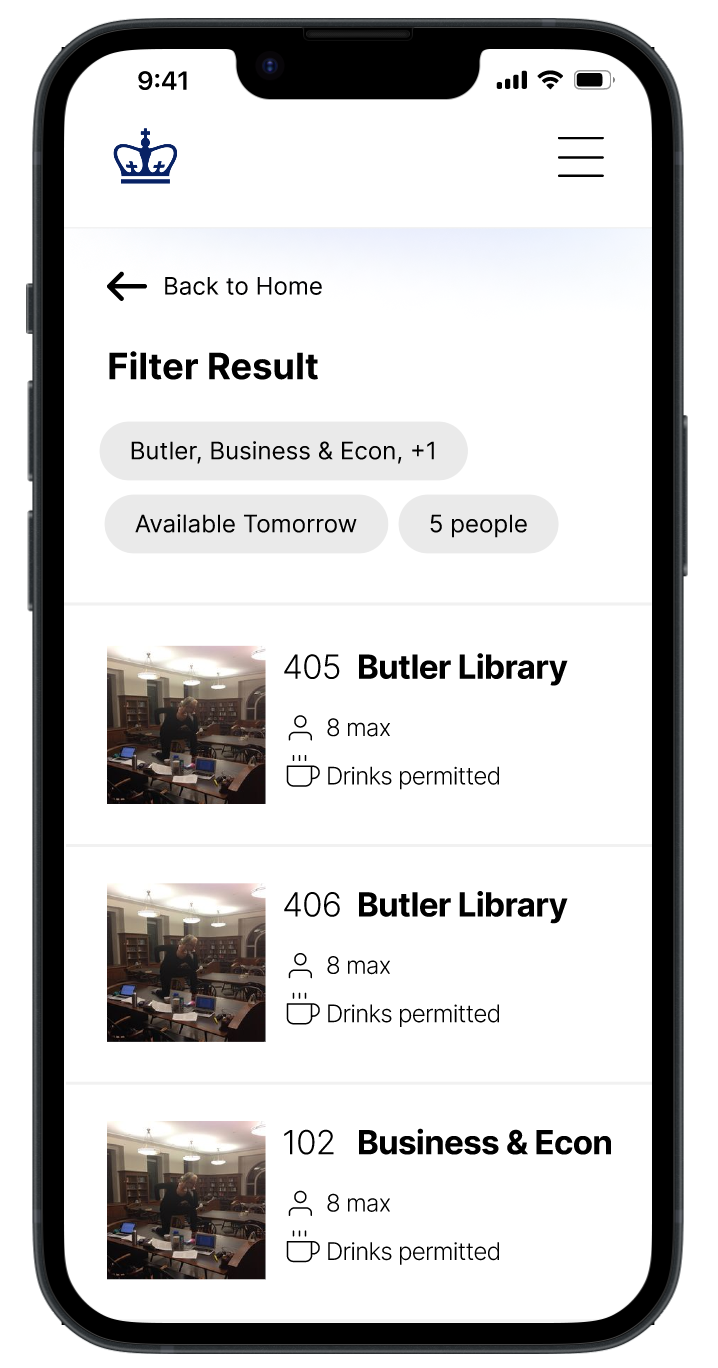
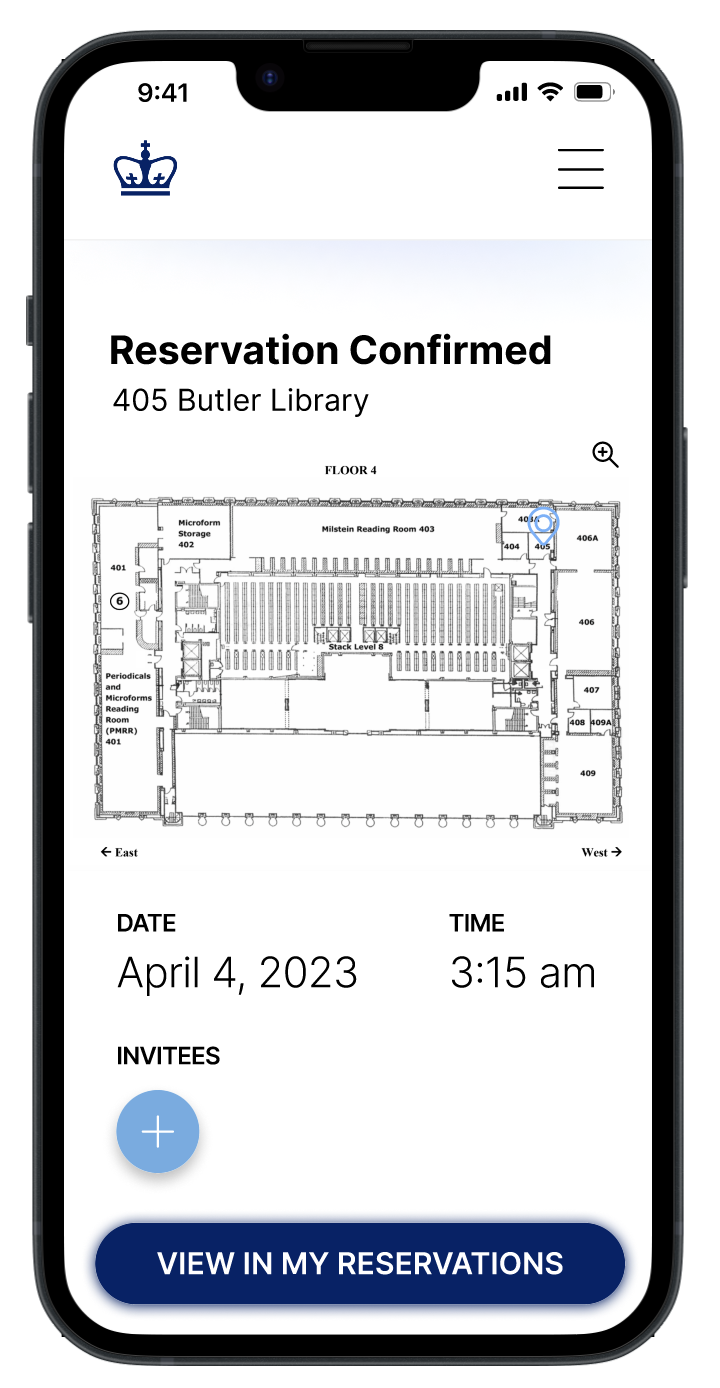
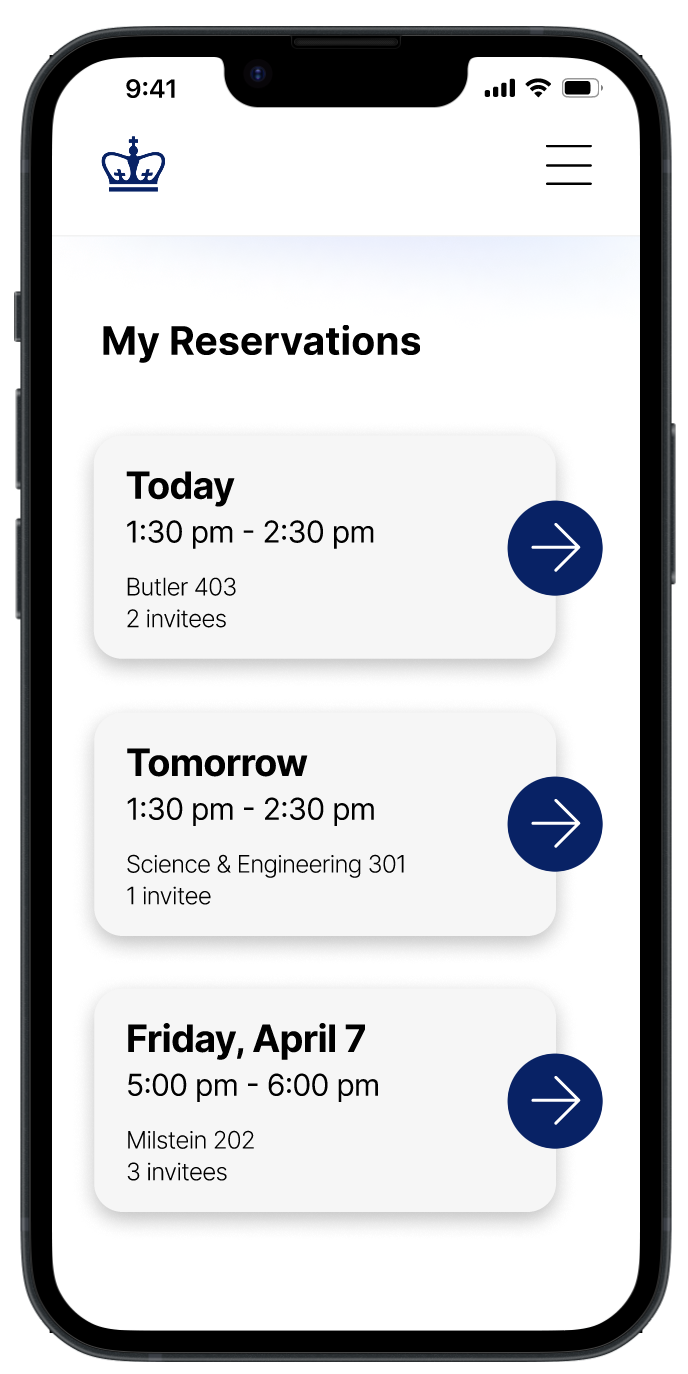
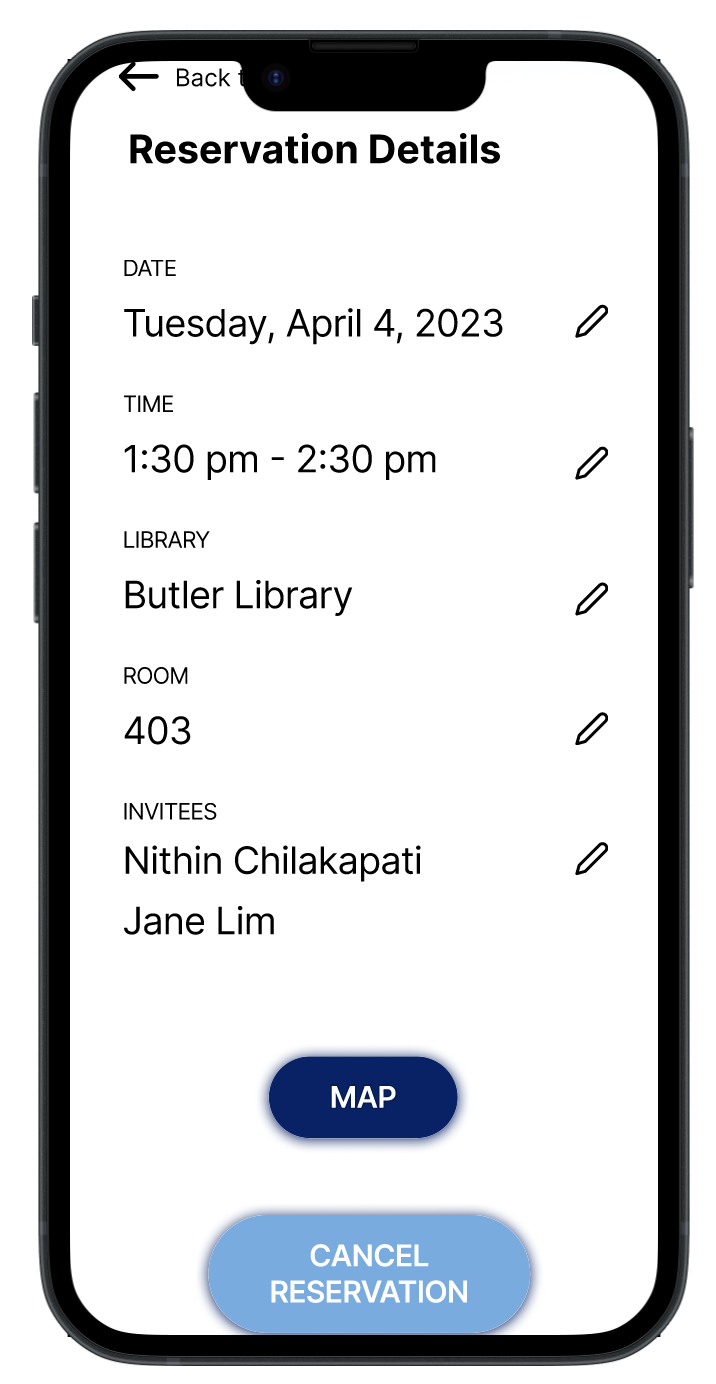
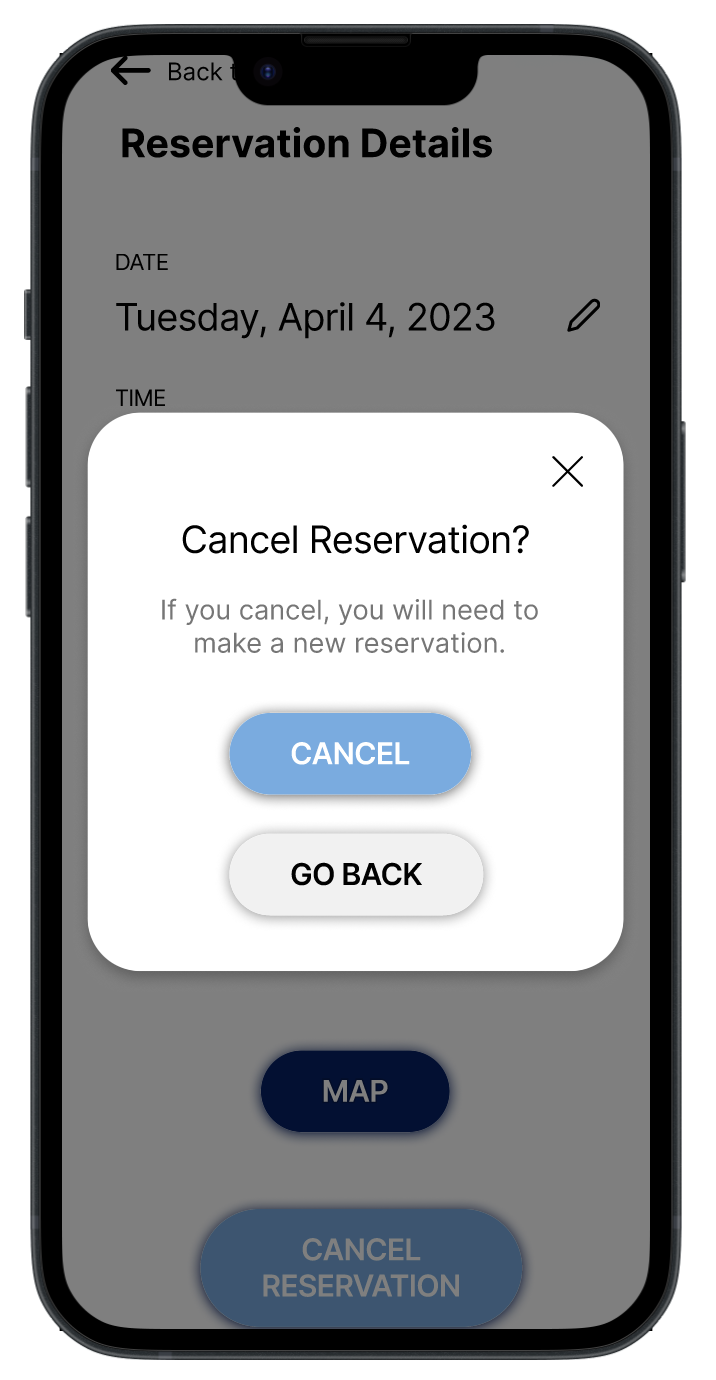
“Study Spot Finder” is a mobile app that allows users to find their ideal library study spaces by applying filters and search functions as well as to manage reservations easily by making, viewing and cancelling reservations in a single mobile platform.
Pain Points
During peak hours and midterm/finals week, students have a hard time finding places to study on campus.
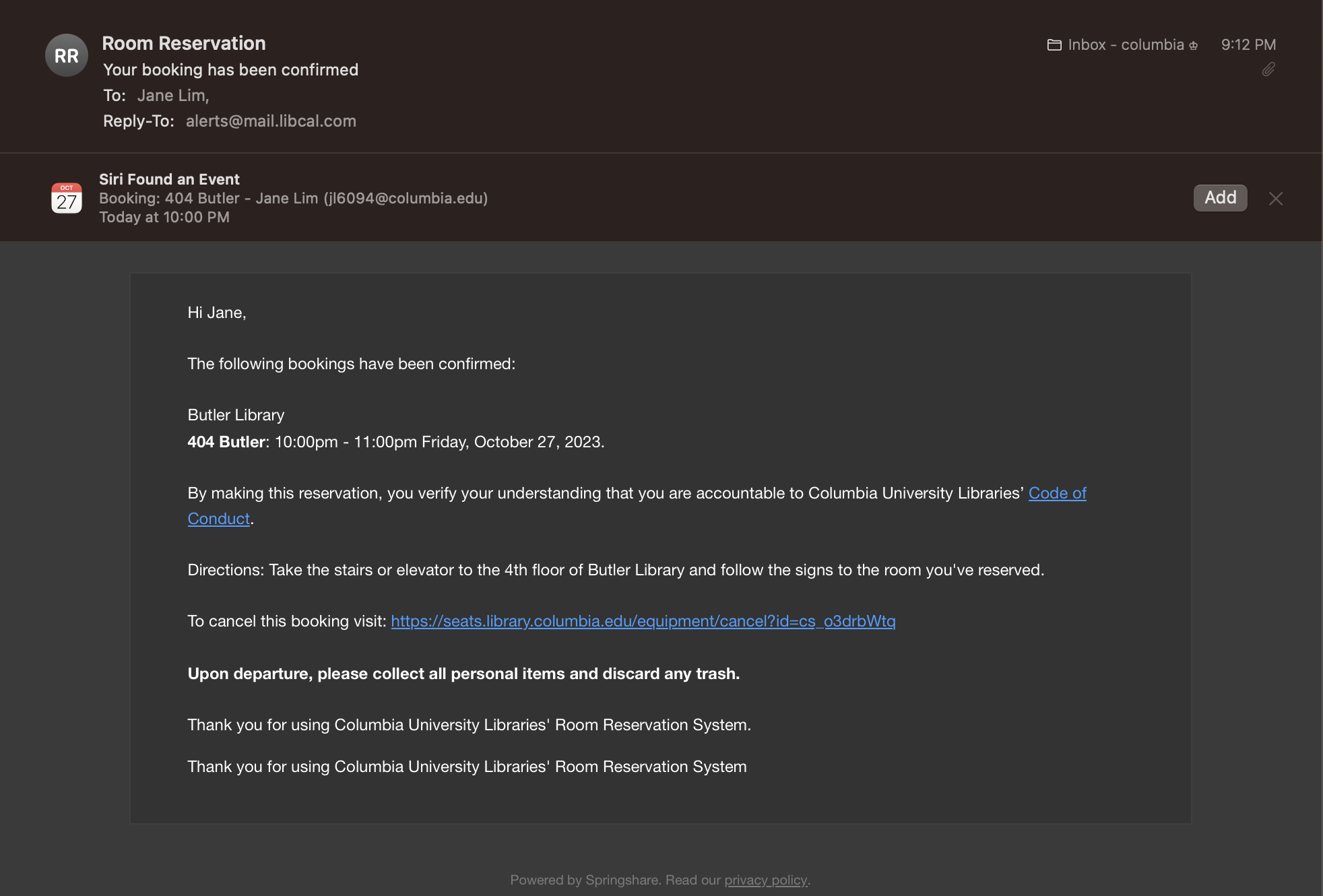
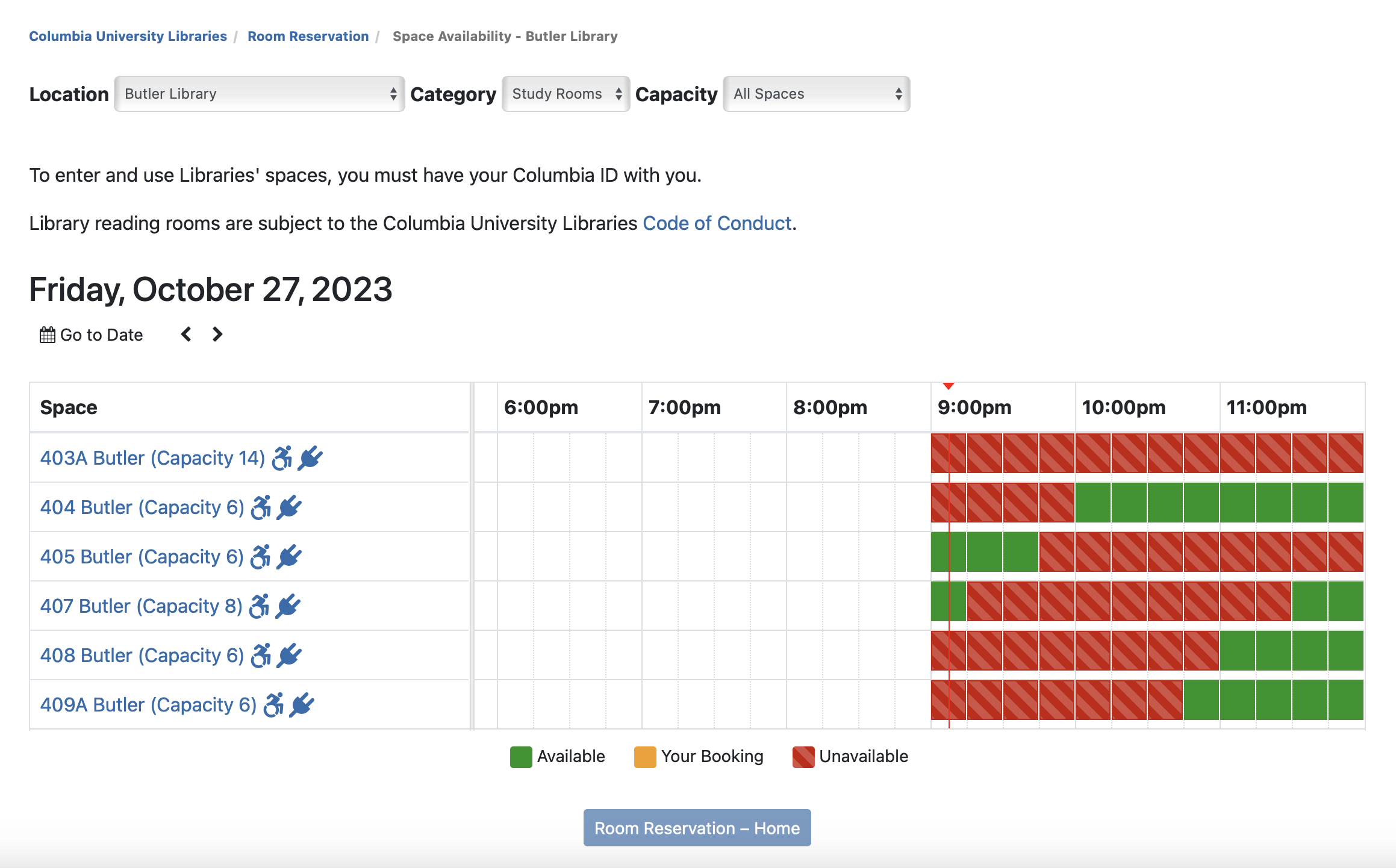
Current booking system at Columbia allows students to make reservations via website; however, cross-checking across different libraries for availability and cancelling reservations are often tedious and expensive due to poor UI and user flow design.
Past Design
Features
- Make a reservation: View available time slots one day at a time, choose calendar view to navigate to a specific data
-lick on the link sent via email
Competitive Analysis
User Stories
User #1: A freshman named Kate, who is in need of a study space to collaborate with other students for a class project – she needs a room equipped with TV/screen projector and preferably a white/chalkboard.

Kate uses the existing website to reserve a space in the libraries to work on the project with her classmates. Unfortunately, she is not able to check what rooms are equipped with what collaboration tool. Since she doesn’t know the school well and how certain rooms in the libraries look, she decides to visit each of the libraries in-person to check which room has what. While searching the rooms, she has difficulty navigating herself with only the room numbers provided, but she manages to figure it out after asking a librarian at the circulation desk. After the search, she comes back to her room, re-opens her laptop and makes a reservation.

Kate uses the newly launched study spot finder, and sees that one of the Milstein study spaces that are available at the time of her meeting has all of the equipment her team needs. She makes a reservation, and has no problem getting to the place with the floor map provided by the platform.

User #2: A graduate student named Brian in a highly collaborative program that requires lots of time spent working on projects with peers. Lives far away from Columbia so has to utilize study spaces on campus when they come here for classes.

Brian uses the existing website to reserve a space in the libraries to work on the project with his teammates. Given a limited amount of time, he wants to see which library is available at a specific time he plans to be on campus. He looks through every library to check the availability at the given time. Finally, having found a vacancy, he makes a reservation, and forwards his confirmation email to his friends.

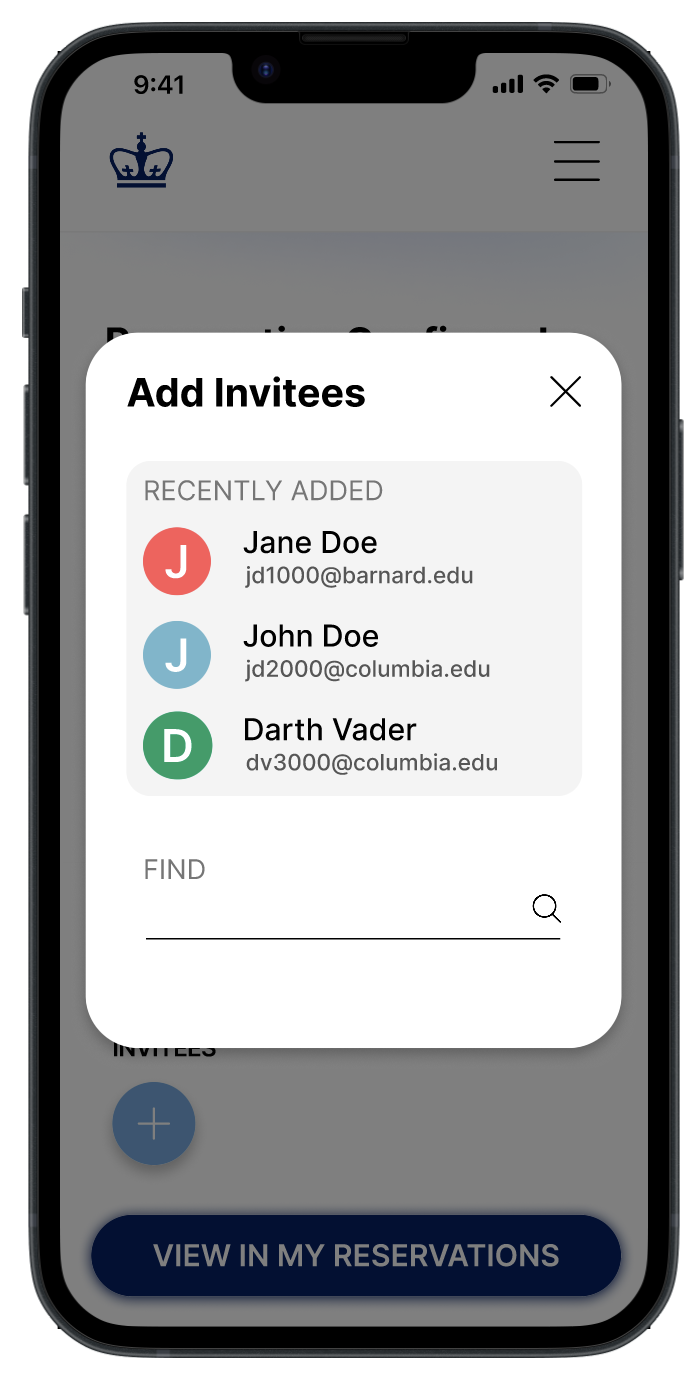
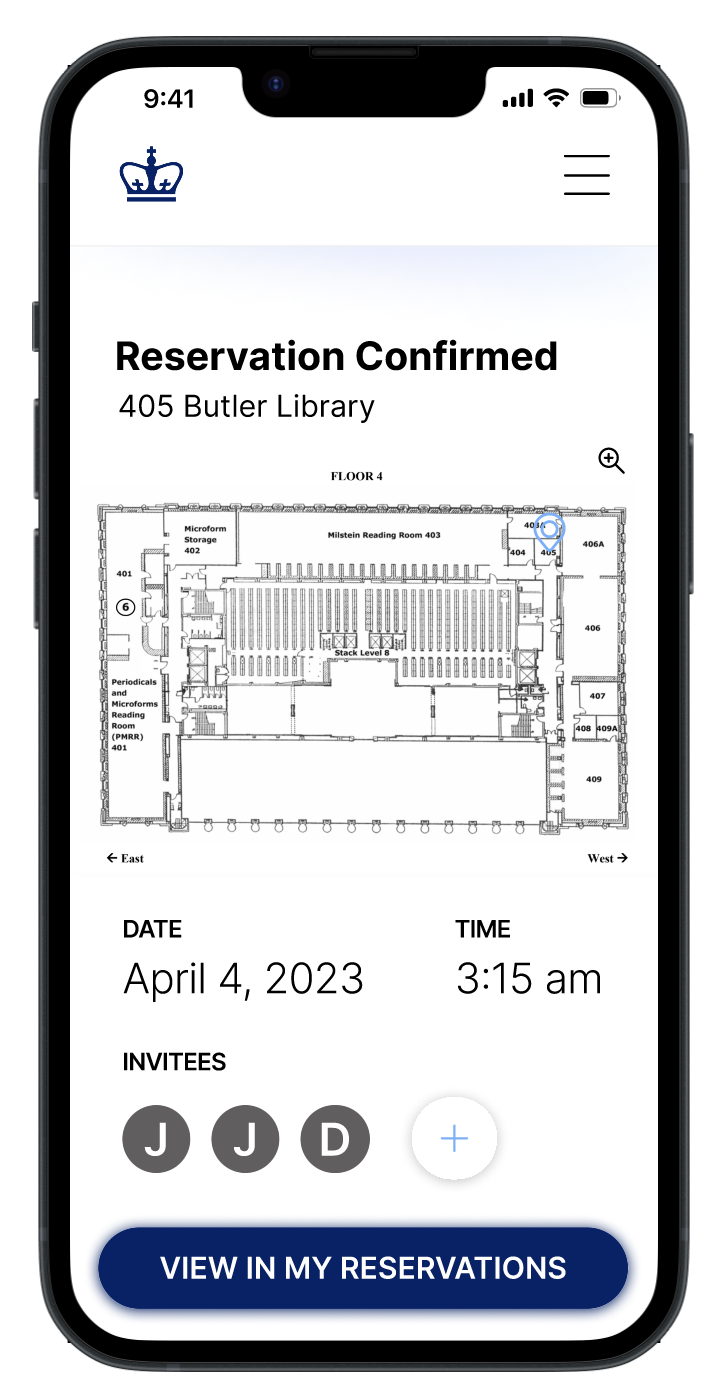
Brian uses the newly launched study spot finder, and is able to search for rooms that can fit his large project group. He is also able to invite his group members to the reservation, and share the reservation information with them.

Takeaway: While users may prioritize a particular library over others, they may need to consider other options, given multiple factors such as time, availability, amenities, etc. In such cases, limiting viewing to one library at a time would be inadequate to satisfy the users' imminent need, and thus will require a number of manual clicks on several libraries until they find the ideal library that fits their circumstances.
Key Research Findings
Our research was conducted in a blind digital survey form, using a combination of unipolar and bipolar 5-point scales.
Free-response was also requested to collect qualitative data.

Main research findings were the following:
- Current usage of study rooms
     Do people tend to study in groups or alone? Often (3.7/5, 5 is daily)
     Where people tend to study? Milstein, Northwest Corner Building, Butler, Dorm Lounges (3/4 library)
     Awareness of study room availability? 100% awareness of study room availability
- Overall experiences with current reservation system
     User Interface? “UX is janky” “Annoying to scroll” Tedious to individually check libraries to find available rooms
     Wayfinding within physical libraries? Generally poor wayfinding (2/5)
     Proof of reservations? 66.7% say a room has been occupied on arrival, 33.3% have had to show proof of reservation before
     Overall: 3.3/5
- How the current experience impacts reservation volumes
     The current system has neither encouraged nor discouraged future use of study rooms (3/5, 5 being encouraged)
Design Opportunities
The goal of this redesign is to streamline room reservation system of Columbia/Barnard to improve the current underutilization of a helpful feature that would appropriately address the pain point of not being able to find a study space on campus.

To achieve this, we have identified 3 main design opportunities:
- Implement an intuitive mobile app design where users are able to navigate easily
- Filter feature to help find the best accomodation
- Enable making, viewing, and cancelling reservations internally
New Design
To view in Figma:
USER JOURNEY FLOWCHARTLO-FI WIREFRAMEHI-FI MOCKUP
Next